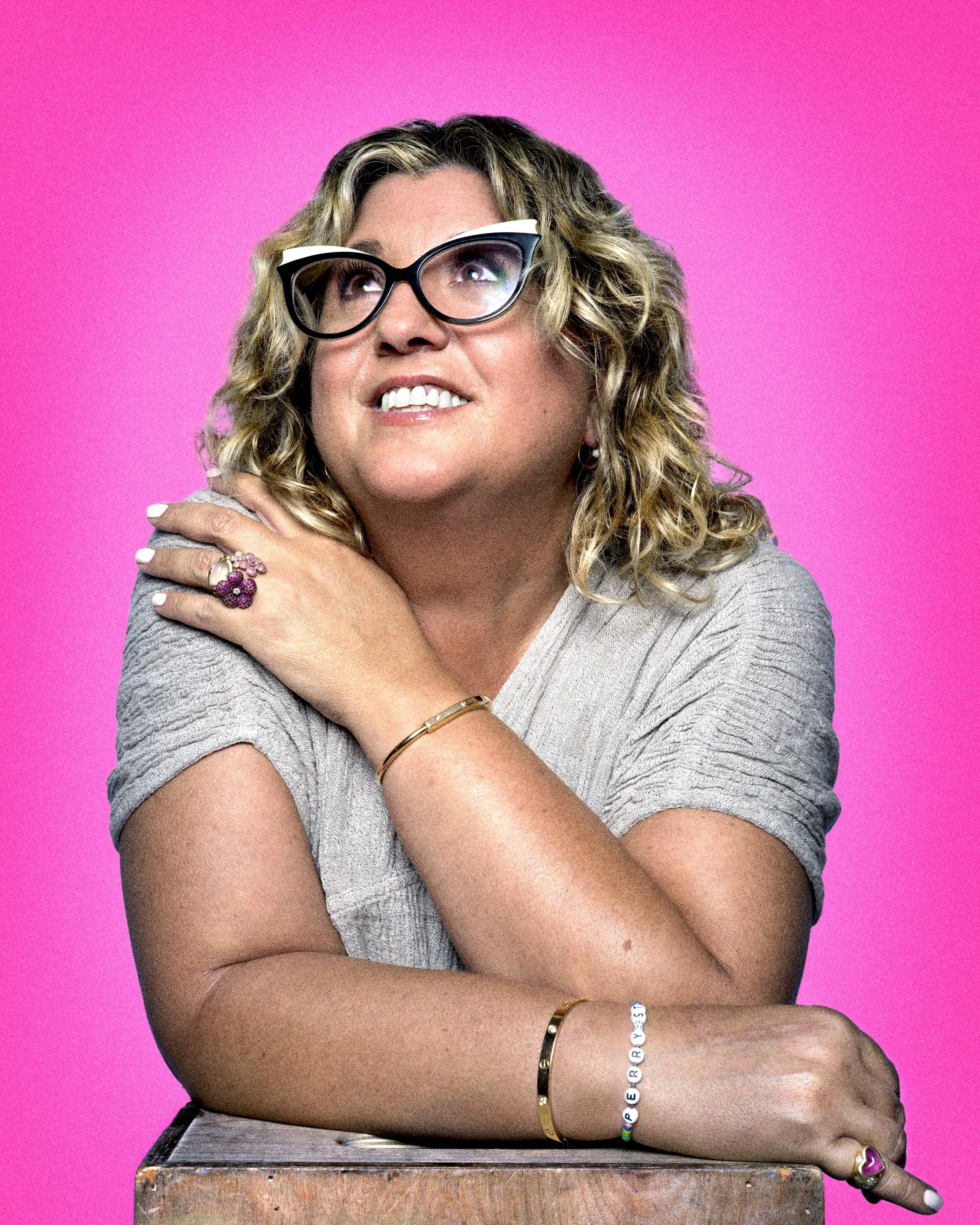
I built a career on being fluent in two languages most people treat as opposites.
Art taught me to see what others miss. Life taught me not to look away.
I majored in art history, where I learned that what you see isn't always what's there. Composition matters. Negative space matters. Meaning often lives in what others overlook.
Later, I moved into corporate finance, spending my career inside some of the world's largest organizations, learning how systems assign value, make decisions, and decide what gets heard. That combination shaped how I lead, build communities, and move through the world.
Eventually I saw the same pattern in people. The most perceptive ones were often invisible in plain sight: hired for their judgment and instinct, then conditioned to second-guess what they knew because it didn't fit the frameworks around them.
That silence got loud.
We're good at recognizing credentials, titles, metrics: what can be neatly explained. But that's not the whole picture. There's another kind of intelligence: judgment built through experience, instinct sharpened over time, the ability to see what others miss before the data catches up.
That is Earned Intelligence. And we have underestimated it for far too long.
Life has taught me to forge my own path, protect the spark, stay curious, and trust what experience has taught me. When conventional wisdom says there's only one way forward, my instinct is to ask: who decided?
I was told to choose: corporate or nonprofit, the boardroom or the field. Pick a lane. I didn't. For more than three decades I've built both at once: leading revenue enablement by day, building schools, shelters, and scholarship programs on what the world called "the side," even though it was never a side. It was a whole life, running in parallel, on purpose, long before anyone had language for it.
That wasn't rebellion. It was refusal, a refusal to shrink into a box that only had room for half of me.
And it was never only about career. The same box shows up in families that expect one role and no more, in friendships that only have room for the version of you they met first, in rooms that reward what's easy to explain and go quiet on everything else. Most of us have been editing ourselves for so long we stopped noticing. We just called it being reasonable. Being easy. A good daughter, a good employee, a good friend.
When people are repeatedly taught not to trust what they know, they start editing themselves to fit the system, not for lack of courage, but for lack of anywhere to bring the fuller version of themselves and be believed.
That costs more than confidence. Organizations miss signals. Relationships stay surface-level. Ideas die quietly. Talent gets overlooked, not for lack of what people carried inside them, but for lack of a place to break through.
I'm not interested in helping people fit more neatly into systems that can't see them. I'm interested in helping them see what's already in them, and changing what organizations recognize in the first place. My work is making the invisible visible: helping individuals name and trust their Earned Intelligence, and helping organizations recognize and use the intelligence already inside them.
Art history taught me to see beyond the obvious. Corporate finance taught me how systems decide what counts. Life taught me that what counts and what matters aren't always the same thing.
Now I'm building the work that makes what matters impossible to ignore.